Book
Stoats, Weasels, Martens and Polecats A Natural History of British and Irish Small Mustelids (New Naturalist Series)

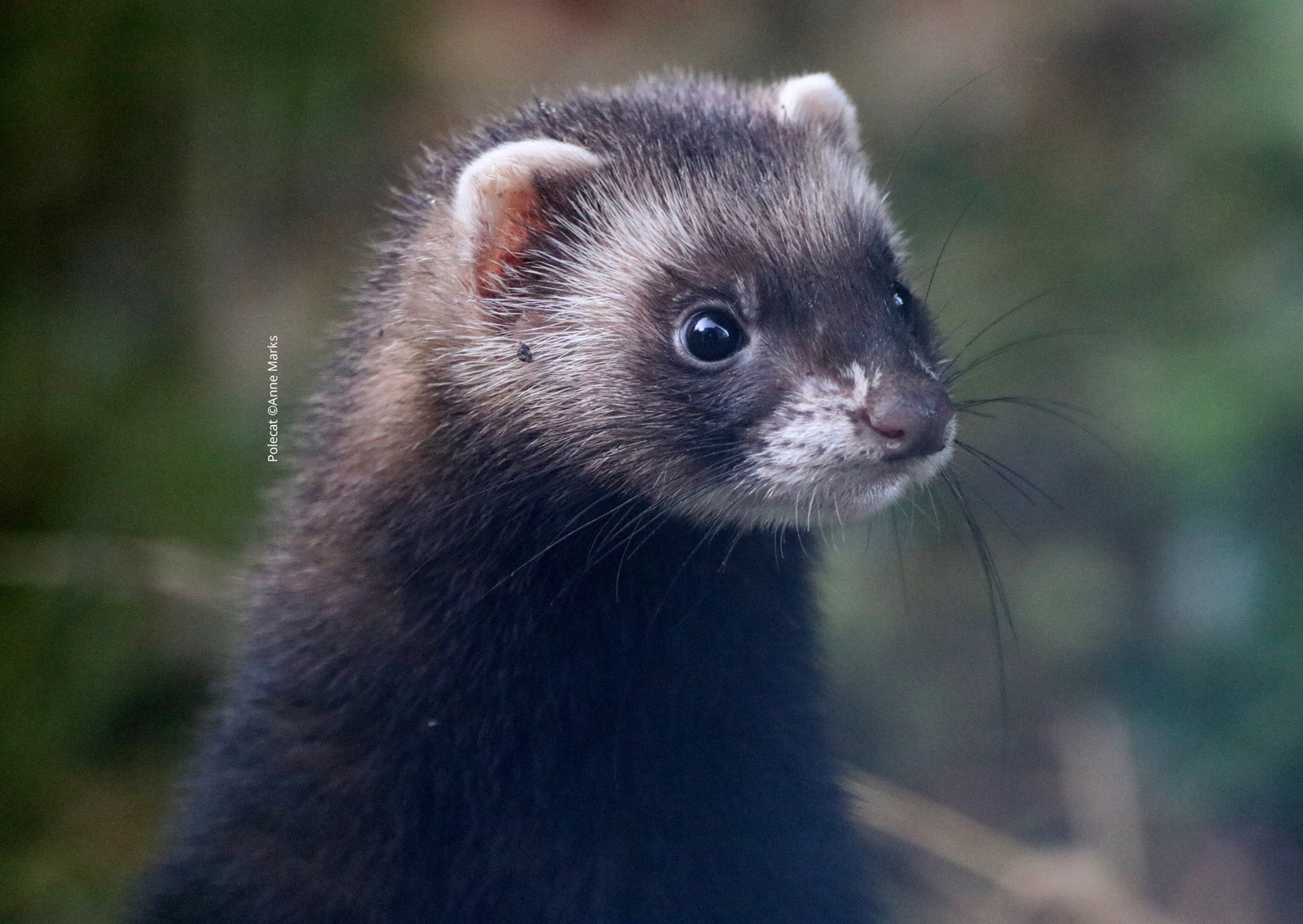
Thanks to a combination of factors, including legal protection and reduced persecution, the polecat Mustela putorius is recovering from near extinction during the 19th century. It has spread out from its historical stronghold in mid-Wales and recolonised much of central and southern England. The polecat is also now present in small populations in northwest England and parts of Scotland where it has been reintroduced. It has never been present on Ireland or the outer islands.
The polecat is classified on the Red List for Britain's Mammals as ‘Endangered’ in Scotland and ‘Least Concern’ in England and Wales. Provided no new serious threats emerge to halt the current recovery, it seems likely that the polecat will become widely re-established in mainland Britain.

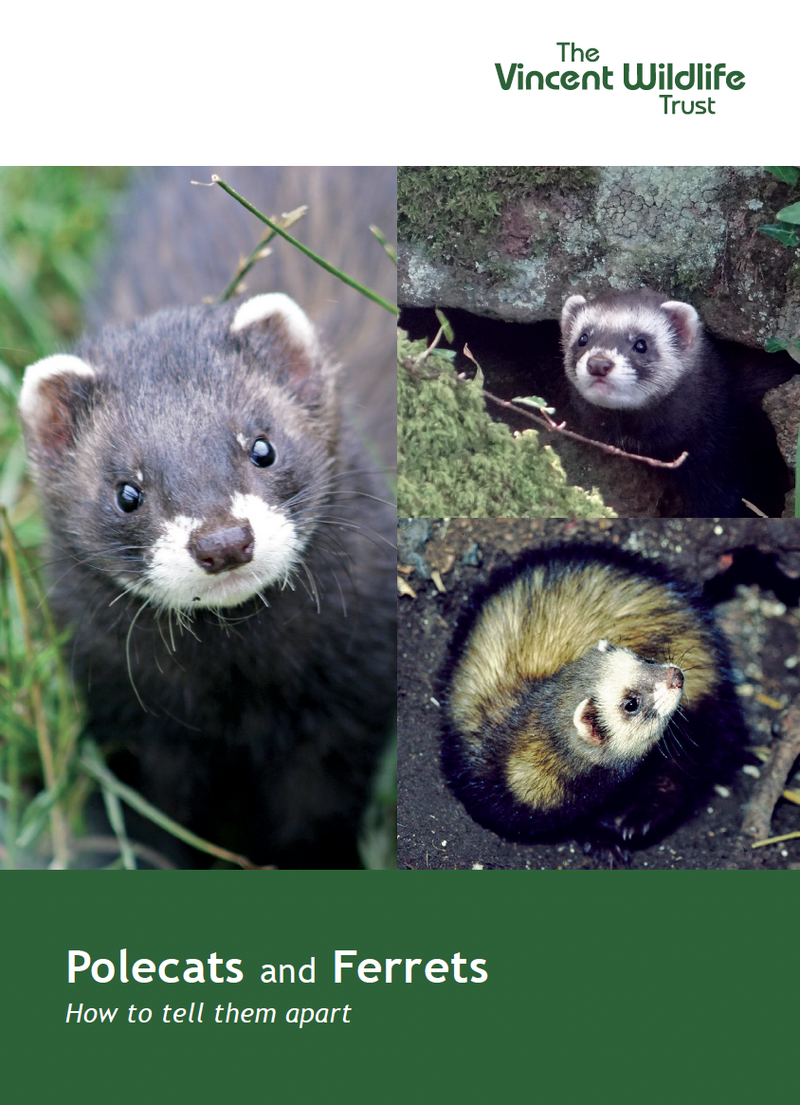
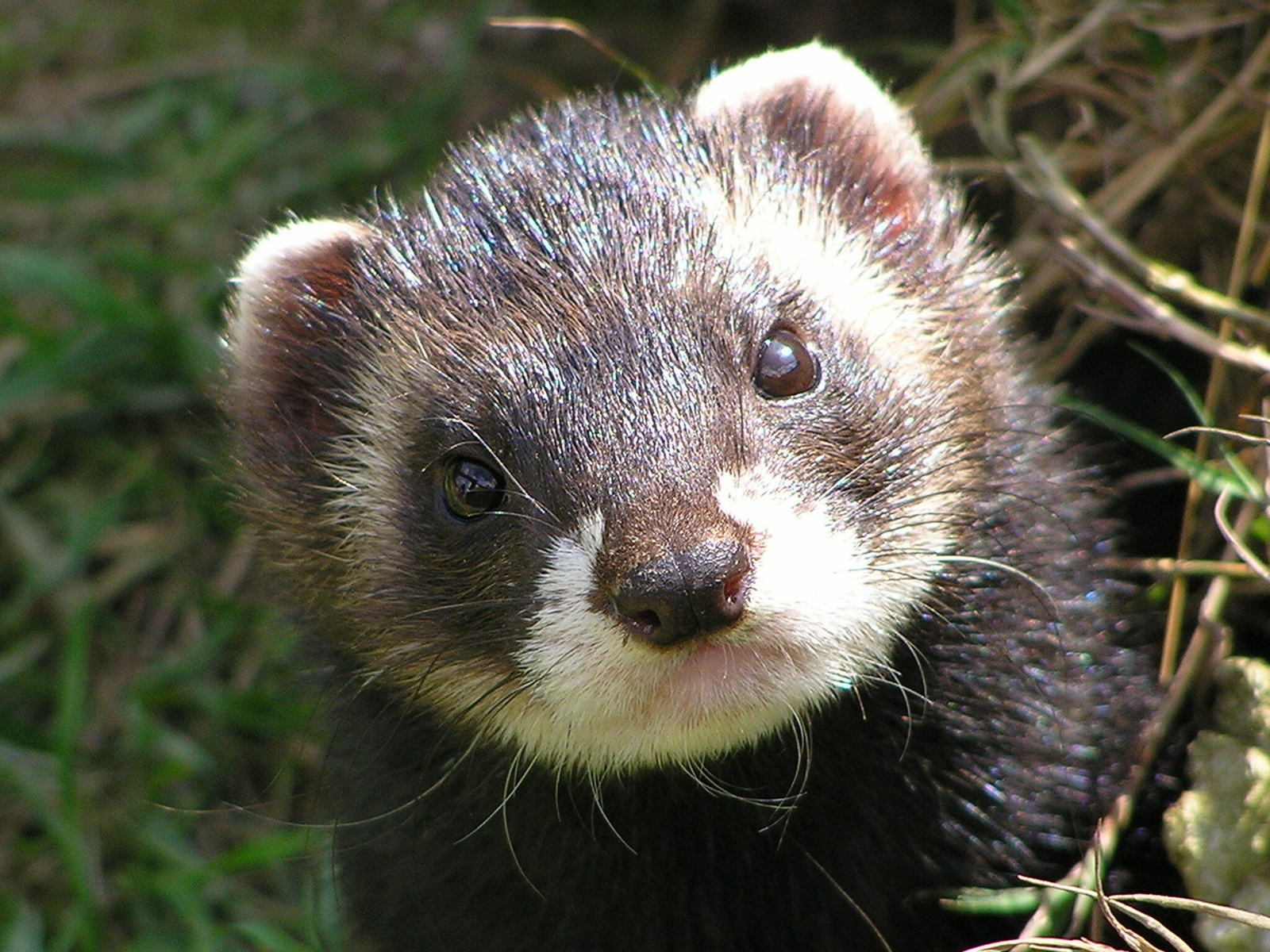
The polecat has a long slim body, with short legs and is slightly larger than a domestic ferret. It has a distinctive ‘mask’ of dark fur across its eyes. Paler cheek patches should contrast against the dark facial mask, and the fur around the muzzle is also pale, with the exception of a dark strip of fur connecting the dark mask to the nose.
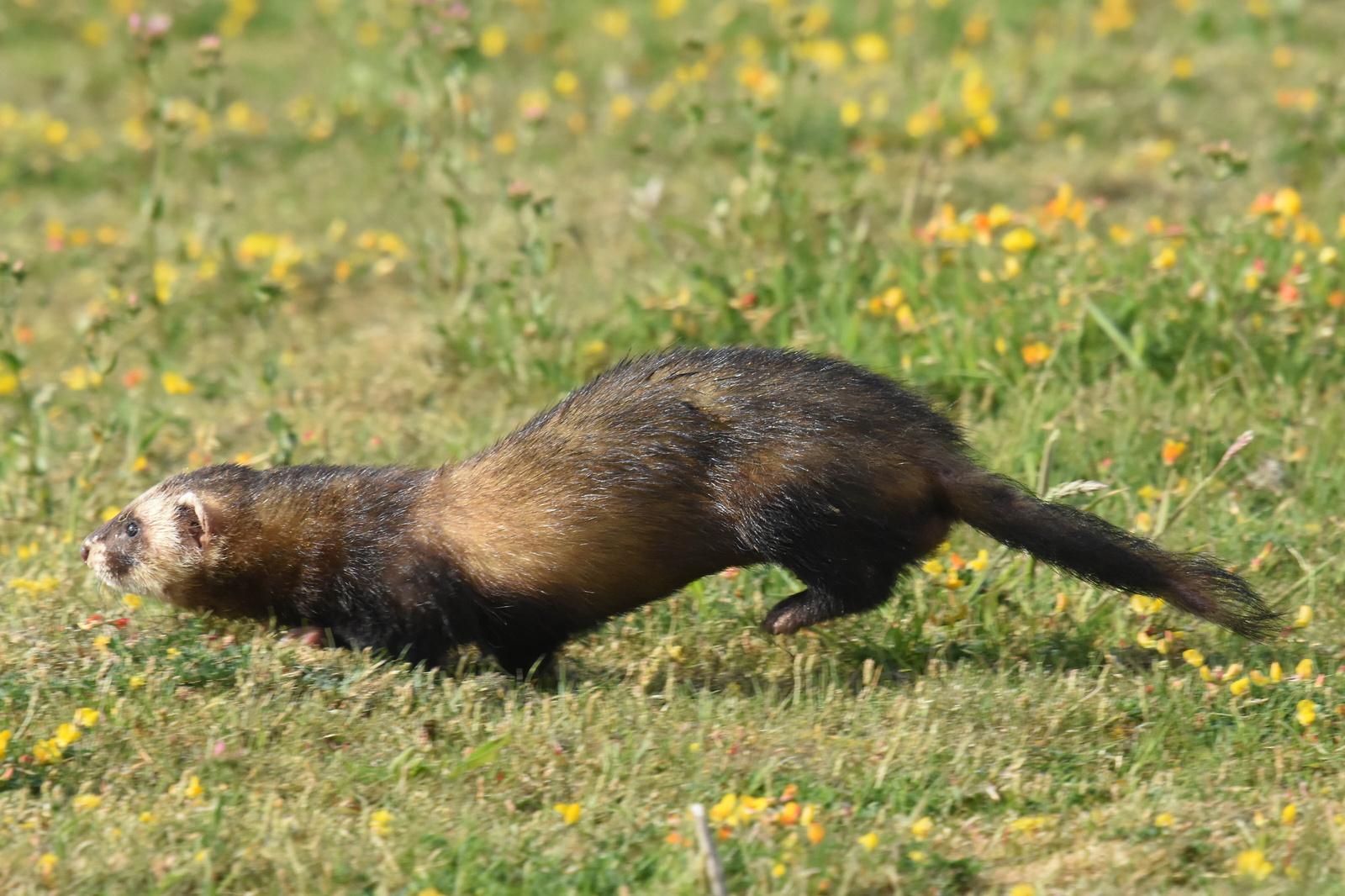
True polecats have dark fur, with a paler buff coloured undercoat that shows through the darker hairs on the body. This is especially noticeable in winter when the paler fur is longer and thicker.
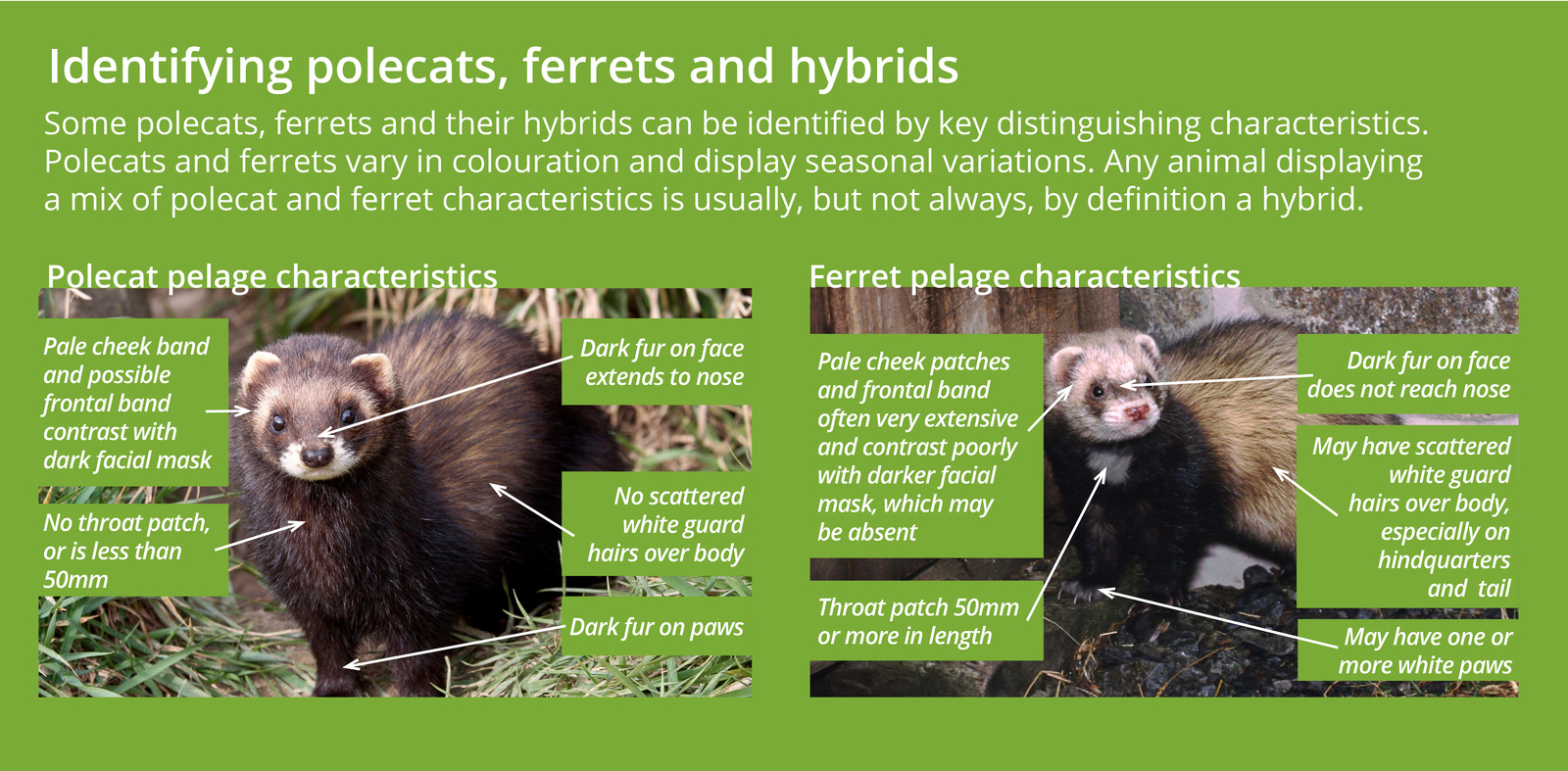
The domestic ferret originates from the polecat and the two can interbreed producing fertile hybrid offspring, known as polecat-ferrets. Hybrids often have paler fur and faded facial markings. The diagram below shows the differences between polecats and ferrets. Any animal displaying a mix of polecat and ferret is usually a hybrid polecat-ferret, but can only be accurately identified through genetic testing.
Size: Males 33-45cm, females 32-39cm; tail length: 12-19cm.
Weight: Males weigh around 0.8-1.9kg, females 0.5-1.1kg.
Lifespan: Up to 14 years in captivity, probably five years in the wild.

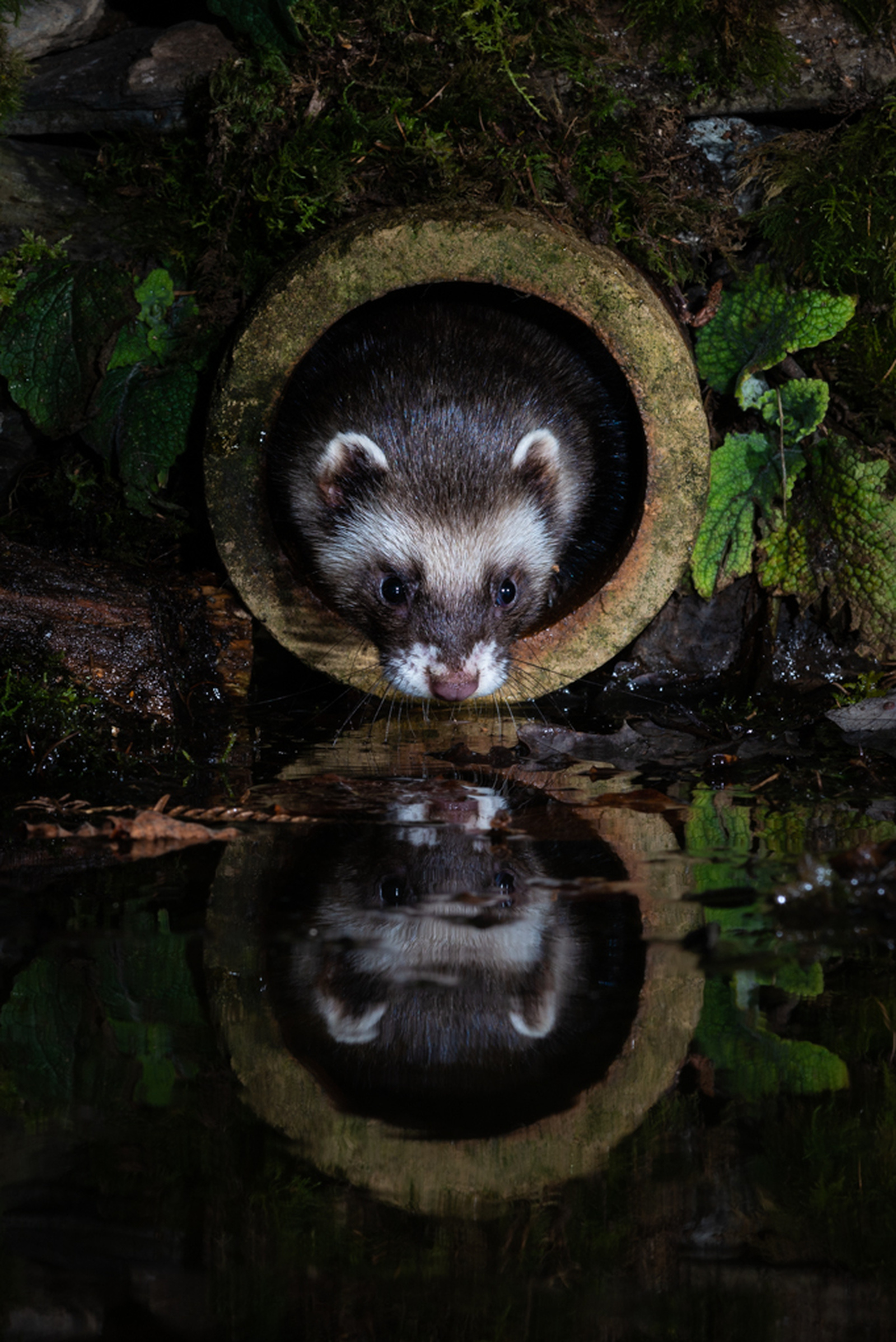
Polecats prefer lowland habitats, such as farmlands, woodlands, marshes and riverbanks.
Polecat dens are commonly found in rabbit burrows, especially in summer, but they frequently move into farmyards in winter, when they may den in hay bales, under sheds and in rubbish tips. Polecats have territories that vary in size according to habitat and food availability — using radio tracking, male territories have been measured at 16-500 hectares and female territories at 25-375 hectares.
Territoriality seems weaker in polecats than other mustelids, perhaps because they move around more to exploit seasonally abundant food sources.
Polecats are carnivorous mammals that eat a variety of small animals, including rodents, birds, amphibians, and reptiles. Their diet can vary depending on the season and the location.
In summer, rabbits are a major food source, and polecats are slender enough to hunt them within their burrows. In winter, rats become a favoured food and sites with good rat populations become usual habitats. Other prey includes small mammals, amphibians, birds and earthworms.
Polecats mate during February-March and 5-10 kits are born during May-June.
Kits are born with eyes closed and thin white hair, weighing 9-10g and stay with their mother for 2-3 months. Juveniles disperse from August-October, with a peak in September, and reach adult size in the autumn. Polecats can breed in their first year.
Like many of our other carnivores, the polecat declined in Britain as a result of historical predator control and persecution associated with gamekeeping and sporting estates.
A major cause of mortality in polecats is vehicle collisions on roads, particularly during the mating season (February-March) and juvenile dispersal (September-October).
Polecats are also vulnerable to secondary rodenticide poisoning. They become exposed to second-generation anticoagulant poison through eating rats and other small mammals that have ingested poison. A 2018 study found that 79% of polecats had been exposed to rodenticides, which is a 1.7-fold increase since the 1990s. It’s not yet known whether this will affect the polecat’s ongoing recovery.
Polecats may also die or become injured in traps set for other species, such as grey squirrels, rats, stoats and weasels.
VWT’s National Polecat Survey is appealing to members of the public to record the presence of polecats, and will run from 2024 until the end of 2025.
Polecats have a wide distribution across Europe, from Britain and Portugal in the west to the Ural Mountains of Russia in the east, but they have never been found in Ireland.
In Britain, the polecat population is recovering and expanding its range, following a severe historical decline. A species range is the geographical area in which the species can be found. Polecats are currently widespread in Wales, central and much of southern England, with isolated populations in northern England and parts of Scotland (Perthshire, Fife and Argyll).
Polecats are fairly generalist and not dependent on any one habitat type. In Britain, they are more numerous in lowland landscapes, but across their range in mainland Europe they inhabit a variety of habitats including riparian vegetation, wetlands, grasslands, pastures, agricultural land and montane pine forests. Polecats use existing structures for den sites, such as rabbit burrows, haystacks and log piles.
In Britain, most of the polecat’s diet comprises rabbits. They also eat rats and other small rodents, amphibians and birds.
Polecats and ferrets can be distinguished by genetic analysis and also by their phenotype (pelage/fur) characteristics, although this is not 100% accurate. Polecats and ferrets are quite different behaviourally too. Ferrets tend to be more tame and docile and generally lack the awareness skills needed to survive in the wild.
Yes. The polecat is the ancestor of the domestic ferret. Polecats and ferrets can interbreed, creating polecat-ferret hybrid offspring that are fertile. This can occur when domestic or working ferrets escape or are lost into the wild, or where feral ferret populations are established (although this is rare in Britain), creating opportunities for ferrets to mate with wild polecats.
Polecat-ferret hybrids typically occur at the edge of the polecat’s range and in reintroduced populations. It’s thought that the presence of ferret genes among the polecat population is not a threat to the population and true polecats appear to ‘outcompete’ hybrids in the long term.
Polecats can be attracted to concentrations of vulnerable livestock, such as poultry, penned pheasants and captive wildfowl and may kill birds if they can gain easy access to poultry and game pens.
Several husbandry techniques are available to prevent polecats accessing pens or coops, such as securing domestic fowl at night in solid, custom-built hen-houses, and nightly closure of ‘pop-holes’ – the ground level access points that allow birds to re-enter pheasant pens. Polecats may squeeze through gaps as small as 4cm, so pens should be built with no gaps larger than this and wire mesh and wooden henhouses should be checked regularly for gaps or weak points. Although polecats can climb, most attempts to break into game and poultry pens occur at ground level.
Although polecats appear to be increasing, they are still at risk from a number of threats. A major cause of mortality in polecats is vehicle collisions, particularly during the mating season (February-March) and juvenile dispersal (September-October).
Polecats are also vulnerable to secondary rodenticide poisoning. They become exposed to second-generation anticoagulant poison through eating rats and other small mammals which have ingested poison. It’s not yet known whether this will affect the polecat’s ongoing recovery in Britain.
Polecats may also die or become injured in traps set for other species, such as grey squirrels and weasels. Although polecats have no natural predators in Britain they are occasionally killed by dogs.
Following severe declines and range contraction as a result of heavy persecution during the 19th Century, the polecat population in Britain has been increasing and expanding into areas of its former range. This recovery is likely due to a combination of factors – reduced gamekeeping pressures during the First World War, the banning of gin traps in 1958, and legal protection under the Wildlife and Countryside Act 1981. Polecats appear to be declining in many countries of Europe.
The polecat is listed on Schedule 6 of the Wildlife and Countryside Act 1981, which prohibits certain methods of killing or taking of the animal.
Polecats are opportunistic and adaptable. They will visit gardens and may take food left out for other animals, such as foxes or badgers. Polecats occasionally den in gardens, under decking, sheds or in compost piles.
Polecats are not a threat to cats or dogs and will avoid confrontation with other animals where possible. Polecats are smaller than domestic cats and dogs and are likely to come off worse in any encounter with the two.