First bat tower built for VWT’s Landscape for Lessers Project
Jenny O'Neill describes how VWT's Landscape for Lessers project has just completed its first bespoke bat tower in Wales.

In May 2026, Vincent Wildlife Trust completed the first bespoke bat tower under its Landscape for Lessers project in Wales, which is a Wales-wide initiative funded through the Welsh Government’s Nature Networks Fund and distributed by The National Lottery Heritage Fund.
The tower has been built close to Rose Cottage, a VWT bat reserve in Gower, which is designated as a Site of Special Scientific Interest (SSSI) for its lesser horseshoe bat breeding roost. However, lesser horseshoe bat numbers have been decreasing here while greater horseshoe numbers have increased over several years. Following regular research and monitoring, this decrease in lessers has also been observed at other sites, suggesting that interactions between the two species within shared roosts can negatively affect lesser horseshoe colonies — and potentially lead to reduced breeding success or the species abandoning a roost altogether. The new tower has been designed to provide a safe and secure alternative roost for the lesser horseshoe bats.
Working with ME Construction, the tower was carefully built within woodland at Rose Cottage. Although building the tower within the woodland brought a few challenges, the contractors worked sensitively throughout the process to avoid disturbance to the surrounding habitat.

Designing a tower for lesser horseshoe bats
The structure includes three internal floor spaces, which creates a range of microclimates and a temperature gradient that allows bats to move within the tower depending on conditions and their requirements at different times of year. Temperature and humidity loggers will allow us to closely monitor conditions in the roost.
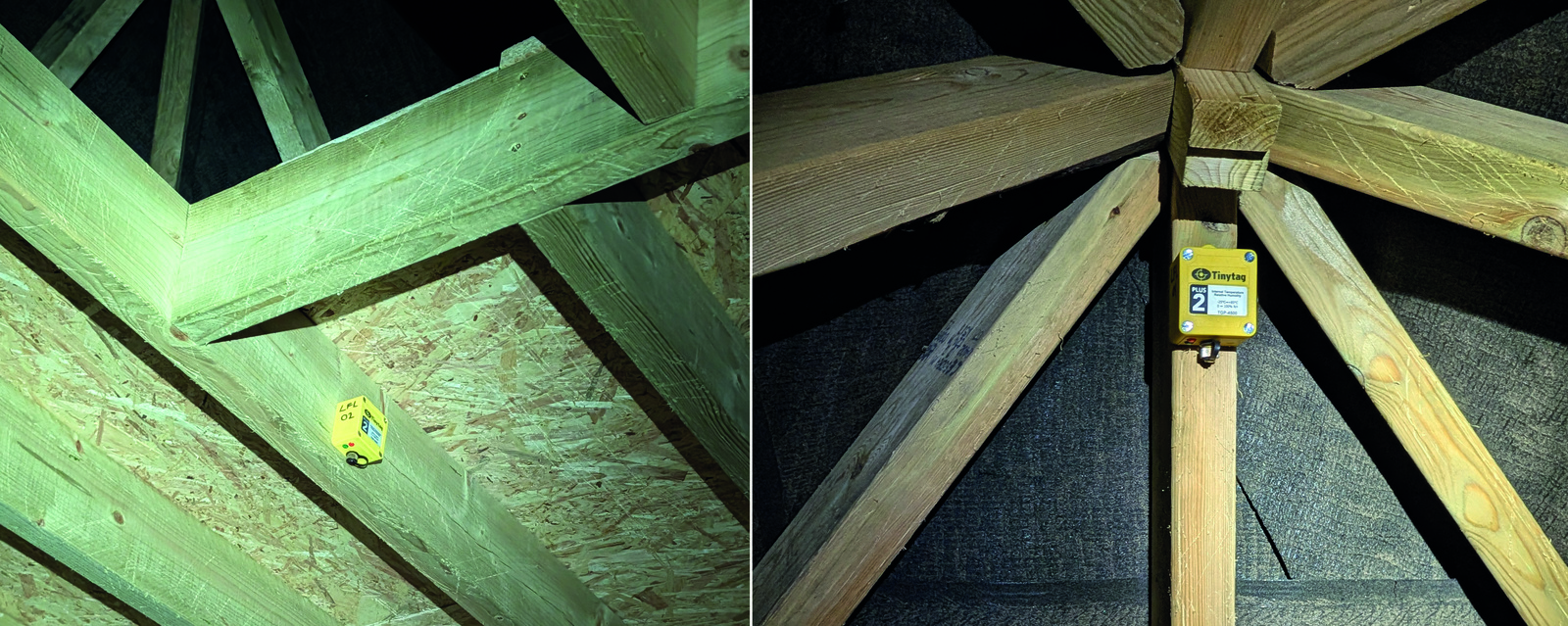
A pyramidal roof finished with natural slate helps maximise solar gain and maintain warm temperatures in the roof space, while the lower floors remain cooler. The roof is lined with bitumastic roofing felt and the internal timbers and floors are scored to create rough surfaces that provide a variety of perching opportunities throughout the building.
The tower also includes a bat entrance fitted with a tip-tray device that allows bats to enter while helping to prevent predators from gaining access or perching at the entrance. A light baffle behind the entrance helps maintain the dark internal conditions.

As the project develops, volunteers will help to create additional roosting substrates to install in the tower and increase the range of available roosting spaces. An insulated ‘cool chamber’ will also be incorporated into the structure to provide stable, cooler temperatures during colder periods.
Alongside the tower build, more than 350 tree whips have been recently planted at the reserve to improve the surrounding habitat.
Monitoring the first visitors
With a reflex camera and bat detector installed inside the tower, we are eagerly waiting to see when the first bats begin to explore and use their new roost. Evidence from previous towers built in Ireland and England has shown that, while it can take time for bats to find and settle into new structures, patience pays off. The first VWT tower in England built in 2021 now supports a breeding colony of lesser horseshoe bats with more than 80 adults counted in summer 2025.

The tower will also be included in the annual National Bat Monitoring Programme counts, which are carried out by volunteers at Rose Cottage and across other lesser horseshoe bat reserves managed by VWT.
Looking Ahead
The completion of the Rose Cottage tower marks the beginning of a wider programme of work under the Landscape for Lessers project. Two further towers are already underway in Pembrokeshire, with further sites planned across Wales in areas where lesser horseshoe bats are in decline, lacking suitable roost sites, or populations are becoming isolated.
Seeing the first tower completed is an important milestone for the project. By creating a network of connected roosting sites across Wales, we hope to strengthen the long-term resilience of lesser horseshoe bat populations and help secure a future for the species across the landscape.
Jenny O’Neill, Lesser Horseshoe Project Officer, Landscape for Lessers
The Landscape for Lessers project is funded through the Welsh Government’s Nature Networks Fund, distributed by The National Lottery Heritage Fund.